What proximity to the Mastic-Shirley station is worth
The buyer paying a premium for the Mastic-Shirley station is usually commuting into the city several days a week and pricing the walk against a second car and a parking permit. For that buyer the premium is rational and they will pay it.
What matters for you is that this buyer is almost always financed. They are buying a house they intend to live in, with a mortgage, which means the premium only reaches you if the house is in a condition their lender will approve. On a Shirley house that needs work, the station adds far less than the listings imply, because the buyers who value it most cannot buy it.
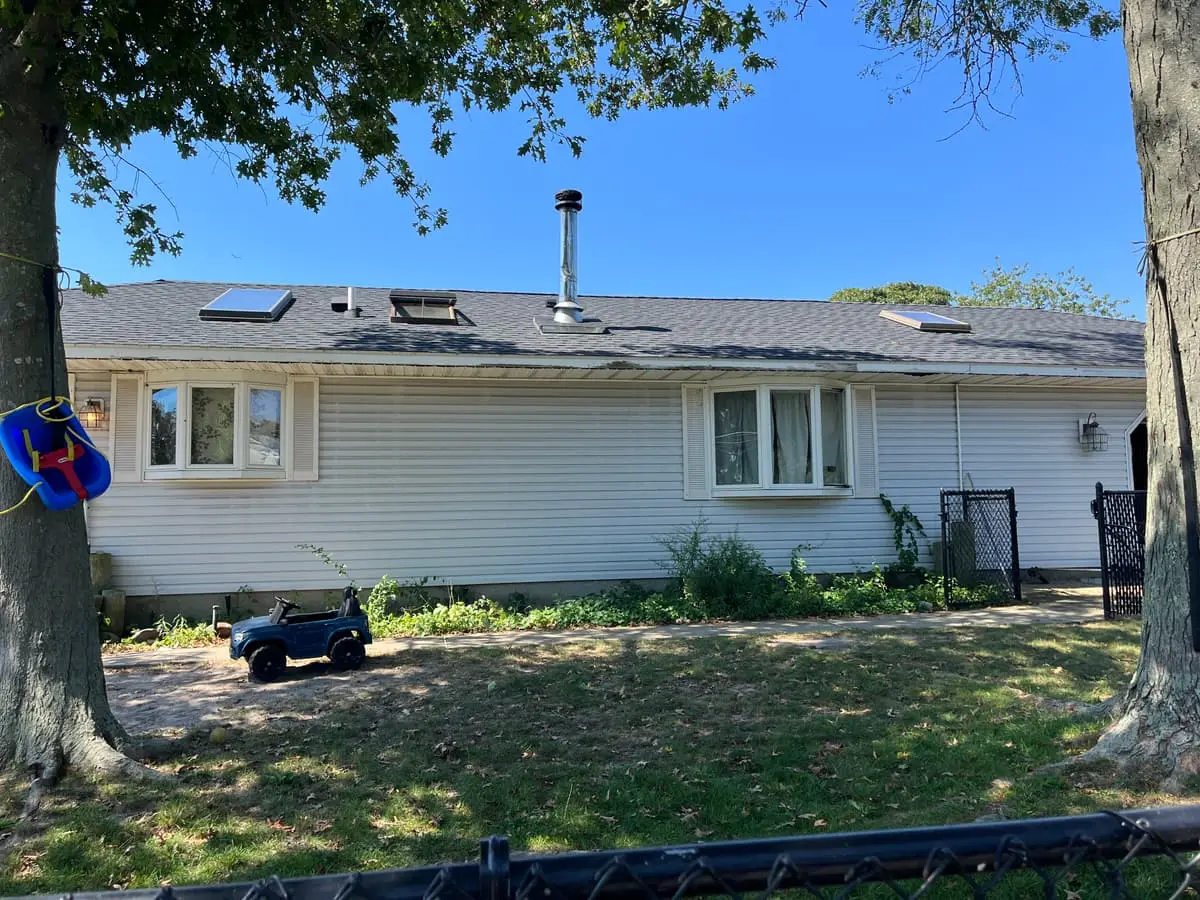
The side of it nobody puts in the listing
There is a curve, and most sellers assume they are further up it than they are. The peak is roughly a five to ten minute walk to the Mastic-Shirley station. Past that the premium fades. Closer than a couple of streets and noise, headlights and commuter parking start pulling the other way.
None of that makes a house hard to sell. It makes it worth knowing where on the curve you actually sit before you accept somebody's number, particularly if they are quoting you a town-wide average and calling it a valuation.
When the location cannot carry the condition
This is the situation we are most often called about near the station. The location is genuinely desirable, the house has not been updated in decades, and the owner has been told by an agent that it will sell itself because of where it is.
It usually does sell, eventually, but to a cash buyer rather than the commuter who would have paid the premium, and after a stretch on the market that costs money. The location does not get you the financed buyer if the house cannot pass their lender's appraisal. That is the part worth understanding before you list.
Why sellers near the station come to us
Some of it is condition. Some of it is that a house near the Mastic-Shirley station attracts a particularly heavy volume of unsolicited approaches, and the owner would rather have one written number from somebody local than another forty texts.
Either way the process is the same. One visit, a written figure within 24 hours, your closing date, and a straight answer about whether listing would serve you better. Near the station, listing quite often does, and we would rather say so than waste your afternoon.
What you do not pay
These are the costs of putting a house on the market through an agent. None of them apply when you sell to us.
- Agent commission
- $27,500 at 5% of the Shirley median none
- Seller closing costs
- About $11,000 on a $549,990 sale. We can cover these. none
- Repairs to make it listable
- The work it needs to show well, out of your pocket first none
- Cleanout and removal
- Paid per load, before a single buyer walks through none
- Carrying costs while it waits
- Taxes, insurance and utilities while you spend 88 to 103 days finding a buyer and waiting for their loan none
The day-to-day of living near a station
Streets within a few minutes of the Mastic-Shirley station carry commuter parking, and how the town handles that varies: resident permits on some blocks, unrestricted on others, and a real difference in what it feels like on a weekday morning.
Buyers who commute treat this as a feature. Buyers who do not treat it as a nuisance, and the second group is larger. It is one of the several reasons a house near a station is not simply worth more than the same house further away. It is worth more to a narrower set of people.
What buyers near the Mastic-Shirley station ask about
Walk time, parking, noise and taxes. A buyer near the Mastic-Shirley station is usually running a comparison against a specific alternative, often a house further out with a longer drive to the platform, and they are trying to price the difference.
That is a rational comparison and it is worth understanding you are being measured against it. It is also why a house near the station in poor condition struggles more than people expect: the commuter has an alternative, and the alternative does not need a roof.
Common questions
Does being near the Mastic-Shirley station raise my price?
Usually yes, if the house is in a condition a financed buyer's lender will approve. The buyers who pay the commuter premium are almost all buying with a mortgage, so the premium only reaches you if the house can carry a loan.
Does train noise hurt the value?
Close enough to walk to the platform is a premium. Close enough to hear the trains from the back of the house is a discount. The gap between the two can be one street, which is why a town-wide average is a poor guide near a station.
Should I just list it, given the location?
Quite possibly, and if we think so we will tell you. A sound house near the Mastic-Shirley station is exactly the kind of property that does well on the open market. Our number makes more sense when the house will not finance or when you cannot wait out a retail sale.